The Tale of Two Cities: Why I Don't Live on the Beach
When I tell people I live in Cancun, they immediately have a specific image in their head.
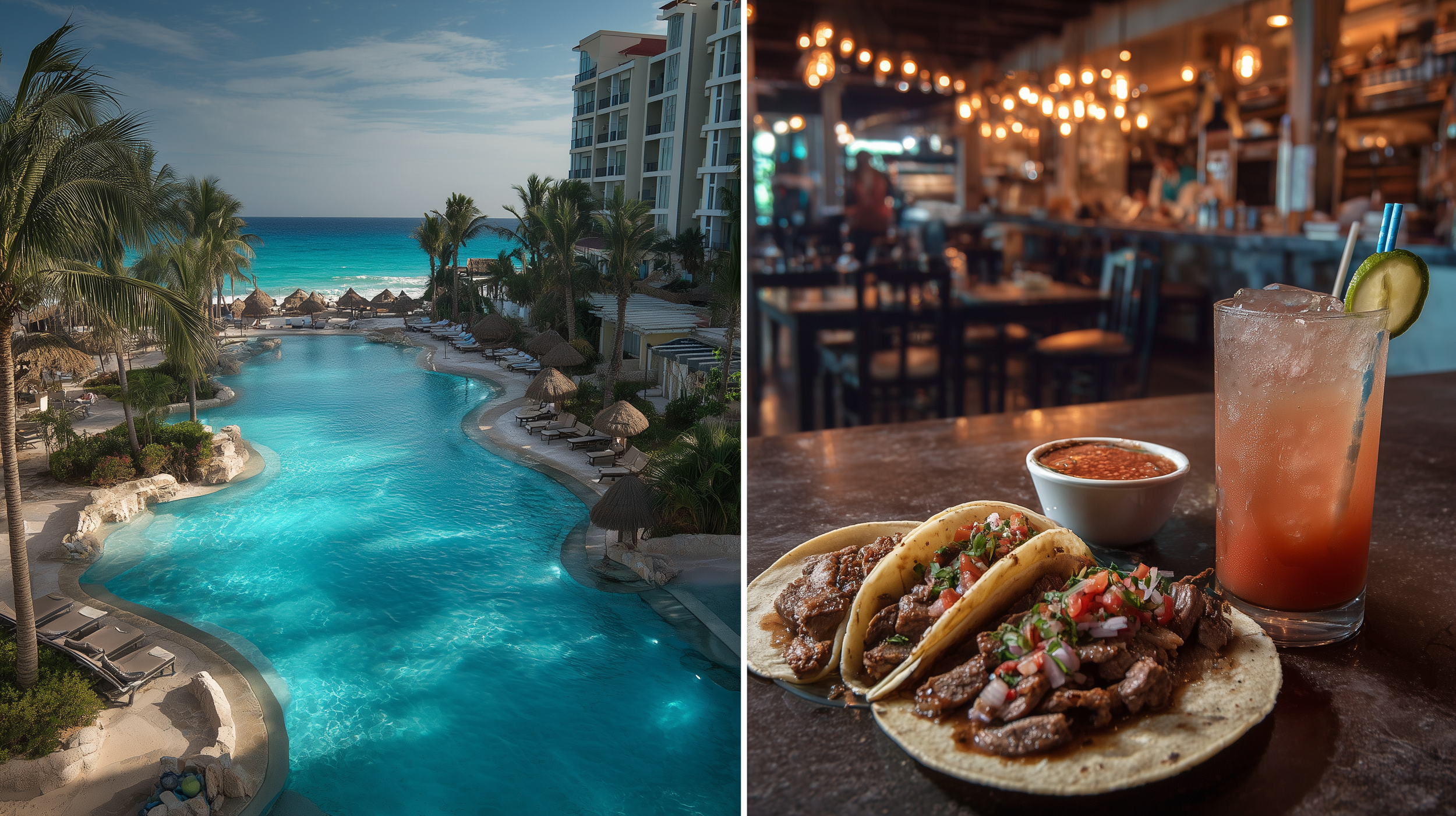
They picture me waking up in a high-rise condo, stepping out onto a balcony overlooking the Caribbean Sea, and spending my afternoons sipping margaritas on white sand. They picture the "Hotel Zone"—that famous 7-shaped strip of land that appears on every postcard.
They are wrong.
I don't live in a postcard. I live in a city.
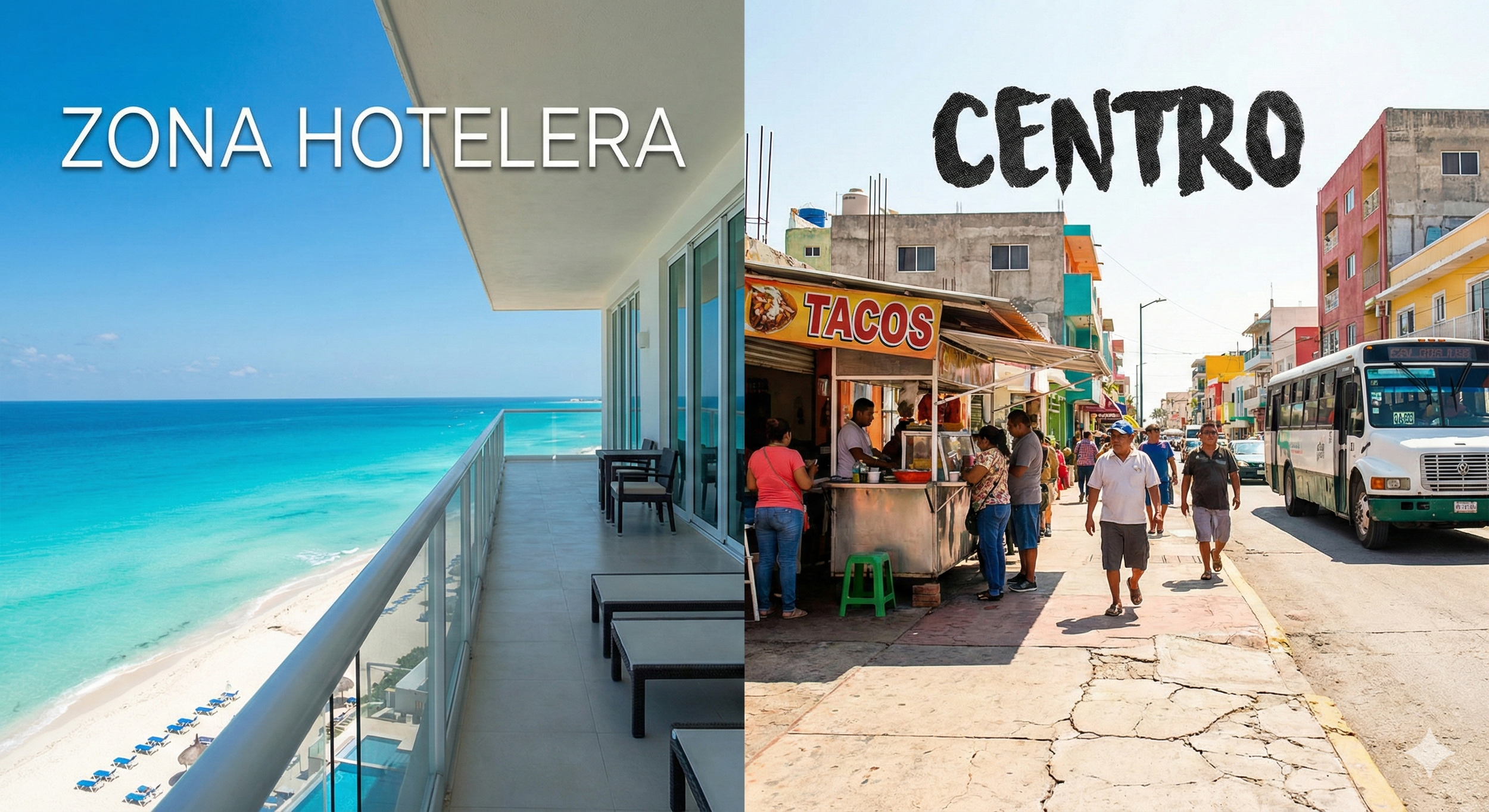
Cancun is actually two distinct cities separated by a lagoon. There is the Zona Hotelera (The Hotel Zone), and there is Centro (Downtown).
If you visit for a week, stay in the Zone. If you live here, you move to Centro. Here is why I passed up the ocean view for the concrete jungle.
The Simulation vs. The Operating System
The Hotel Zone is a masterpiece of tourism engineering. It is manicured, safe, and breathtakingly beautiful. But it is also a bubble.
I often tell friends that the Hotel Zone feels exactly like Miami, but with better tacos. (And, ironically, people in the Hotel Zone often speak better English than they do in Miami).
It is designed for friction-free consumption. It is a simulation of Mexico, curated for people who want the weather but not the culture.
Centro is the Operating System. Centro is where the people who make the Hotel Zone run actually sleep, eat, and live. It is gritty. The sidewalks are a suggestion—broken concrete often gives way to tree roots. The stray dogs have street smarts. It is louder, messier, and infinitely more real.
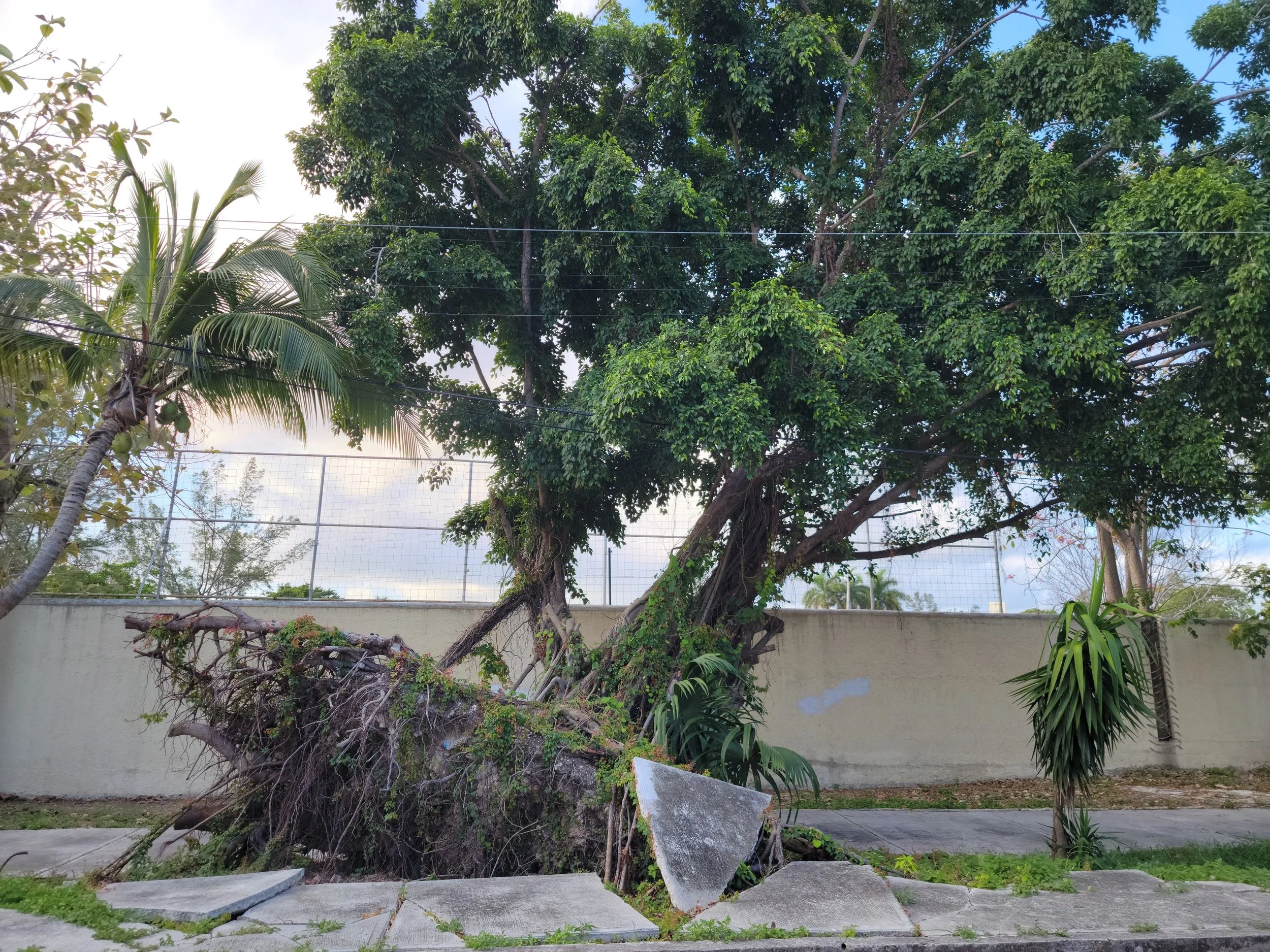
This tree has looked like this since the last hurricane - in 2020
The Taco Math
The primary difference between the two worlds is simple economics.
Last week, we went out for lunch with a group of eight people. We went to a local spot in Centro for fish tacos and burritos.
One of the guys in our group had never been there before. He was hungry, so he ordered three tacos. What he didn't realize is that "three tacos" in a tourist trap is a snack; "three tacos" at a local joint is a challenge. Each order came with two massive pieces of battered fish and two tortillas. You are meant to split them.
He essentially ordered six tacos. He fought valiantly, but the tacos won.
When the bill came for the entire table—eight people, drinks, and a mountain of food—the total was 1,000 pesos. That is about $50 USD.
Fifty dollars for eight people.
In the Hotel Zone, fifty dollars gets you a round of drinks and maybe an appetizer. In Centro, it gets you a feast.
The People You Meet
In the Hotel Zone, you run into tourists. They are from Ohio, or London, or Brazil. They are happy, but they are transient. They are passing through.
In Centro, you run into the people who stayed.
The ratio of interesting stories per capita is significantly higher downtown. You meet people who are in the middle of reinventing themselves.
Yesterday, my Uber driver was a Mexican national from the other side of the country. He met his wife while living in Canada. He spent the entire drive telling us the story of their movie-worthy meet-cute.
I’ve met expats who moved here forty years ago, back when Cancun was essentially a fishing village with big dreams. They came to escape the rat race and never looked back.
In the Zone, you talk about the weather. In Centro, you talk about life.
The "Gringo" Reality
I want to be clear about one thing: I do not blend in.
I am 6'4", blond, and have blue eyes. I could live here for twenty years, perfect my accent, and dress exactly like a local, and I will still look like a lighthouse in a dark room. I will never be mistaken for anything other than a foreigner.
In the Hotel Zone, the ratio of foreigners to locals is high. In Centro, I am often the only gringo in the restaurant.
But here is the beautiful part: It doesn't matter.
The locals treat me with incredible warmth. The barriers here aren't about where you were born; they are about how you behave. I have found that showing basic good manners and making a genuine attempt to speak Spanish—even if I stumble—goes a long way.
The Trade-Off
Living in Centro means I don't see the ocean when I wake up. It means I have to deal with traffic, construction noise, and the occasional power outage.
But it also means I live in a real community, not a resort.
The beach is beautiful, but it’s a vacation. Centro is home.