The War of Attrition: Protecting Your Tech (and Apartment) from the Tropics
We often romanticize the tropical lifestyle. We picture open windows, gentle breezes, and working on a laptop while sitting on the beach.
The reality? The beach is full of glare and sand that destroys keyboards, and those gentle breezes are often carrying enough salt to rust stainless steel.
Living in Cancun means you are in a constant, low-level war of attrition with nature. The elements here are actively trying to destroy your stuff. And if you don't fight back, they will win.
Here is the tactical guide to keeping your expensive digital nomad gear alive in a hostile environment.
1. The Electrical Roulette
In Canada, I plug my computer into the wall without a second thought. The power is clean, stable, and boring.
In Mexico, the power grid is… spirited.
Living in Centro, in an older, nicer neighborhood, means relying on infrastructure that has seen better days. Power surges, brownouts, and blackouts are not just possible; they are scheduled programming.
Just last week, I was jarred awake at 2:30 AM by a sound that every long-term expat knows: the low hmmmmmm of a struggling line followed by a violent BOOM!
A transformer down the street had decided it had enough. I spent the next twenty minutes wandering around the dark apartment with a flashlight, checking every outlet.
The power was out, but my gear was safe. Why? Because I don't trust the walls.
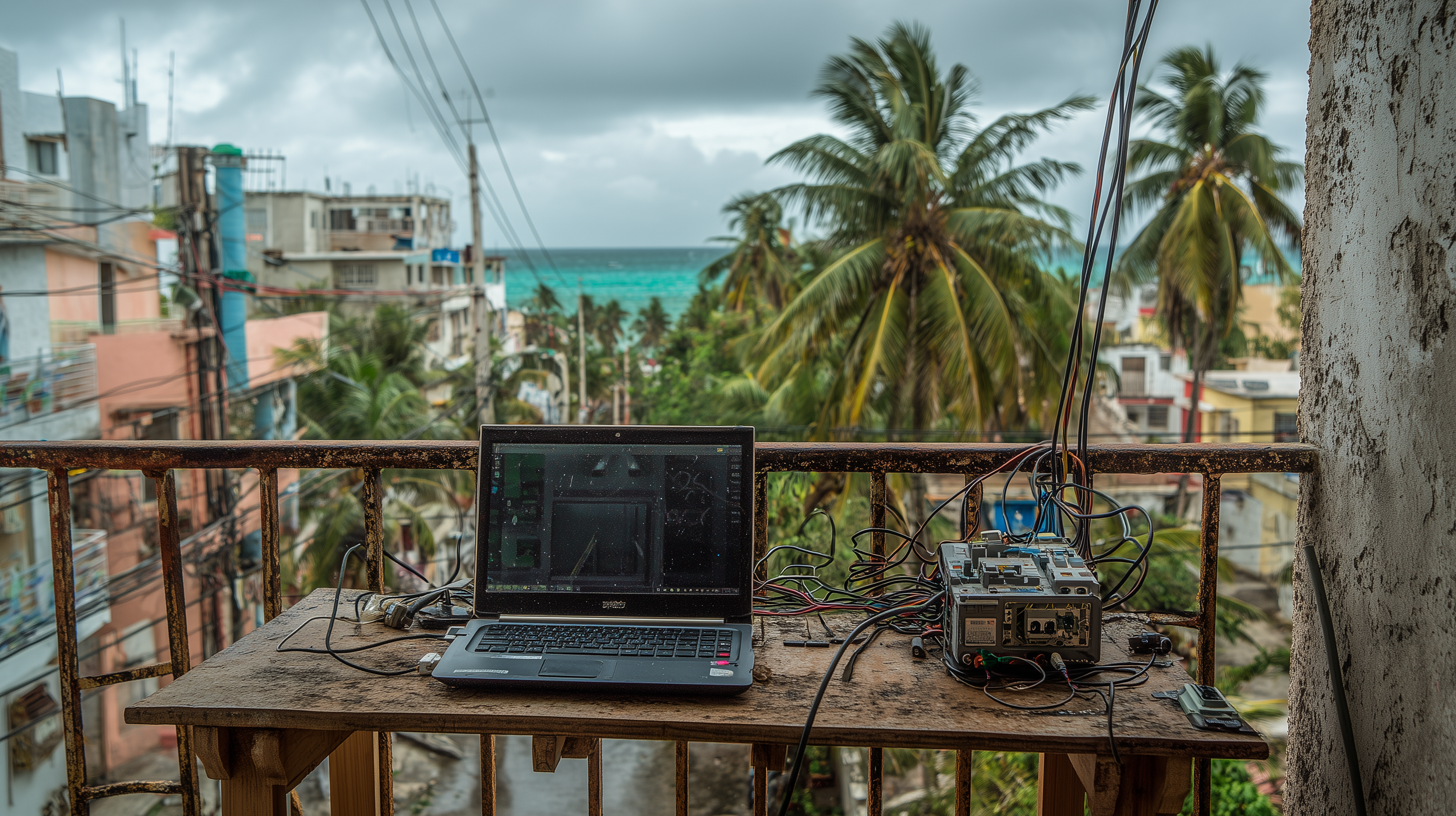
Every expensive piece of electronics I own—laptops, monitors, Starlink router—is plugged into high-capacity voltage regulators or a UPS (Uninterruptible Power Supply). You simply cannot plug a $2,000 laptop directly into a Mexican outlet and hope for the best. Between the lightning storms and the aging transformers, you need a firewall between your gear and the grid.
Pro Tip: Don't forget the Fridge. Your laptop isn't the only thing at risk. Power spikes kill appliances too. However, you can't just plug a refrigerator into a standard computer UPS; the compressor motor draws too much power when it kicks in. Look for regulators specifically labeled “Línea Blanca” (White Line). These are heavy-duty units designed specifically for appliances like fridges and washing machines. They take the hit so your groceries don't have to.
2. The Salt Water Assassin
We all know water is bad for electronics, but salt water is a special kind of malicious. It finds a way in, and once it dries, the salt crystals expand and corrode everything they touch.
You might think, "Well, I don't take my laptop swimming." True. But even gear designed for the ocean isn't safe.
I have an Oceanic Geo 2.0 dive computer. This is a piece of technology literally engineered to go deep underwater. I thought I took good care of it—rinsing it after dives, drying it off. But one day, the contacts that sense water activation just stopped working. The salt had won.
If you are bringing cameras, drones, or dive gear here, you need to be obsessive about maintenance.
For waterproof gear (like GoPros): "Rinsing it off" isn't enough. You need to soak it in fresh water to dissolve the invisible crystals. Even if your GoPro is waterproof, I highly recommend buying the dive housing. It keeps the salt water away from the camera's seals and charging ports. It’s much cheaper to replace a plastic case than a corroded camera.
For non-waterproof tech (Phones/Laptops): Keep them dry and clean. If salt can kill a dive computer, imagine what that salty air does to the exposed USB-C port on your phone if you leave it sitting out on a balcony. And don’t believe the waterproof claims of your phone. They are not designed for swimming in the Caribbean.

Oh yes, the clouds look pretty. But clouds bring rain. An rain wrecks things.
3. When it Rains, It Pours (Sideways)
There is rain, and then there is Caribbean rain.
It is not uncommon to go to bed on a perfectly clear night, only to wake up to a partially flooded apartment. Why? Because the wind here doesn't just blow the rain; it drives it horizontally.
In Mexico, the screens on the windows are called mosquiteros (Google Translate will tell you this means "mosquito nets," which is technically true, but here they are just your standard window screens). They stop bugs, but they do nothing against a squall hitting your glass doors at 60 km/h.
If your balcony drain gets blocked by a stray leaf—and it will—that water has nowhere to go. It fills up the balcony like a fish tank until it finds the path of least resistance: the track of your sliding glass door.
Ask me how I know.
Now, checking the balcony drains is part of my weekly routine, right up there with checking my email.
4. The Silent Killer: Humidity
Even when the power is on and the floor is dry, the air itself is attacking your possessions.
Mold is the state flower of Quintana Roo. If you leave a leather belt in a dark closet for a month, you will come back to a fuzzy black science experiment.
We fight this on two fronts:
Chemical Warfare: We have jars of Damp-Rid in every single closet.
The "Friend" System: Since we are "Digital Monarchs" and travel back to Canada for parts of the year, we can't just lock the door and leave. We have friends come by specifically to turn on the air conditioning for a few hours.
It’s not for comfort—it’s to pull the moisture out of the walls and furniture.
The Trade-Off
Does this sound stressful? Maybe a little.
But this is the tax we pay for the lifestyle. We trade the reliability of the north for the beauty of the south. We accept that our laptops might die a year earlier, that our dive computers might need replacing, and that we might wake up to an exploding transformer in the middle of the night.
Because the next morning, when the sun comes up and the humidity clears just enough to see the turquoise water? You realize the war of attrition is worth fighting.